Saturday
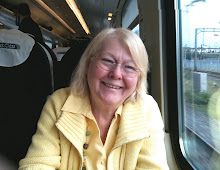
Michael's and my four day unlimited rail passes had one last day to go. We spent the day taking the East Coast rail line to York and back, a distance of about 200 miles each way. The East Coast line is another high speed route from London to Glasgow and Edinburgh, Scotland. There were only three stops between London and York. Our first class coach had free Internet and complimentary coffee but no free breakfast. Of all the high speed trains we rode, I think Virgin had the best amenities and the best service. Michael used his new iPhone to track our location and speed. I could clearly see a blue circle moving across the Google Earth map. Our speed maxed out at 130 mph. The landscape was mostly flat. Few rivers and no canals were visible in the fleeting landscape. More cows and horses than sheep. Rapeseed plants were in bloom and many fields were bright yellow. I am surprised that for a densely populated country there is so much open farmland. Most people live in towns and cities. Michael got a great picture of some British train spotters on the platform at Doncaster. These older gentlemen get their kicks from counting and tracking the trains that pass their station. We were fortunate that the rain fell mostly while we were on the train and it had pretty well cleared by the time we got to York.
York is a major rail intersection and we saw lots of different trains. The high speed trains go mostly north-south and local service is provided for east west travel. It is relatively easy to get from London to anywhere but to go from Newcastle to Manchester is a chore. The station is just outside the walled old city of York. Michael's intrepid guide book suggested we walk the wall of the old city, walk through several historic neighborhoods, cross the river and eventually visit York Minster, the largest medieval Gothic cathedral in northern Europe. The city isn't as much of a tourist trap as Chester. For one thing it is much larger. There are streets with all the usual mall type stores and signs advertising the usual historical exhibits. There are also unexpected little medieval and Tudor streets. We even stumbled across a local outdoor market. The Shambles was so narrow and overhung that it looked its hundreds of years of age even though today's stores are mostly gift shops. The sun came out and we had a lovely walk.
I have been inside a number of Gothic churches. York Minster is the lightest and airiest one inside that I have seen. It is absolutely beautiful. The priest and staff were preparing for a wedding in the Quire area, right in the center of the cathedral. Some of the church was off limits but they graciously let me take photos from a distance. A cathedral is the head church of a diocese, the area administered by a bishop. It is where the bishop has his cathedra, or seat. A minster is the Anglo-Saxon name for a missionary church. The first minster in York was built in 627 A.D. At that time in England the Christians were converting the pagans. Many churches dating from that era are Minsters. I walked around the interior of the cathedral peering into all the open nooks and crannies while Michael circled the exterior. I took about a hundred pictures.
Our next destination, in fact the reason for our trip to York, was the British National Railway Museum. This has the reputation of being the biggest and best rail museum in England. It is certainly big and probably is the best. The museum consists of three large interconnected buildings. There are static displays going back to the beginnings of railroading and working up to the first Chunnel train and even a coach from a Japanese bullet train as well as a sit down restaurant among the trains. There was a Royal train from Victoria's era and in the workshop area we saw the steam powered Flying Scotsman locomotive from the late 1800's in the process of restoration. We wandered into a simulated control center with live displays of the York train yards. A bunch of train nuts were hogging the displays and more were out on the porch overlooking the station and yards spotting trains. They really know how to have fun. Perhaps the most interesting, to me, was the warehouse. A hundred and fifty years of rail memorabilia was tucked in very which way. There as no sense or organization but it was really intriguing. By mid afternoon we were museumed out and headed back to London. The train we took was non stop. We were back to London in under two hours. We had to wait ten minutes or soon a siding just outside Kings Cross Station because we were fifteen minutes early and the platform we were assigned to for debarking was occupied.
Kings Cross station is across the street from St Pancras station. I had no time for pictures as we ran for our train the day before so we took some time to explore the beautiful old station and its modern extension. I think by this time Michael was getting tired of my constant picture taking.
Michael said that he wanted to eat dinner at a Chinese restaurant that had ducks hanging in the window. We went back to Chinatown, near Convent Garden and walked around looking at the various choices. The restaurants in the main part of Chinatown were geared for tourists and mostly overpriced. We found a small place just off Convent Garden with the ducks in the window, seven or eight unpretentious tables and reasonable prices. We had a remarkably good dinner - duck of course. It had been a long but fun day.
Wednesday, May 26, 2010
Monday, May 24, 2010
A Glimpse of Historic England
Friday
Imagine: Friday began with another train ride! Michael and thought we had allowed plenty of time to get to the St Pancras railroad station. We actually arrived at the station a good ten minutes before the high speed train to Ashford International on our way to Rye was to leave. The St. Pancras station has been extensively modified in the past few years. The original building is a historic landmark. A vast new addition has been added from which the Eurostar train to Paris leaves. The tracks for regular service have also been moved. We wandered, lost, in the vast space since the signage was mostly lacking. Various gate attendants gave us conflicting directions. We were certain we would miss the train before we finally found the platform. The escalator to the platform was hiding behind a Starbucks. A quick sprint and we just made the train. The conductor, a lovely lady told us not to run. She apologized for the poor signage. It seems the National Trust has to approve any changes to signs in historic buildings and they have not yet approved signage in the old part of the building directing passengers to the new tracks.
The high speed run to Ashford was quick and relatively uninteresting as a large portion was underground. The above ground sights were mostly suburbs and marshes. Our train, operated by Southeastern railways, was comfortable and the conductor made sure we debarked at our connection. There was no breakfast service, however, unlike Virgin Trains. We left the high speed train at Ashford International station. All the stops on the London to Paris route appear to be called International. We transferred to a branch line also operated by Southeastern Railways and made our way to Rye, southeast of London, at a more leisurely pace. There were great views of the Kentish countryside which featured lots and lots of sheep.
Rye is in East Sussex and dates to before the Norman conquest of England (1055). It is less commercially developed than Chester. Little remains of the ancient castle and city wall. The buildings are medieval Tudor and Georgian. Rye is a very pretty town with quaint shops and candy stores. It originally overlooked the sea but its local river long since silted up and it now overlooks the Romney Marsh. It's large church has one of the oldest still operating mechanical clocks in England. The weather had been spitting rain during our train ride. As we climbed the hill into the old portion of the town the sun came out making the setting wonderfully picturesque. We followed the walking tour in Michael's well used guidebook and only took one wrong turn. A pleasant stroll took us back to the station for our continued journey to Hastings, on the real seacoast.
The town of Hastings is not where the famed Battle of Hastings in 1066 was fought. The actual site, in a village now called Battle, is about 15 miles inland. Hastings, to my surprise, is a seaside resort at the bottom of a sandy cliff. It reminded me a lot of Atlantic City, New Jersey in March. There is a miles long beach and an amusement park near the water. Instead of salt water taffy and funnel cakes, there were lots of shops selling fish and chips. Souvenir shops and game arcades lined the streets. There was even a tacky casino. We took a funicular railway to the top of the cliff. Suddenly we were in a different world. There we saw a cliff top restaurant with a spectacular view, beautiful lawns and expensive old hotels. The view to the east showed Hastings Old Town a much more attractive place than the tourist area. A short hike from the top of the funicula we encountered the ruins of Hastings Castle. It was cold and there was a stiff breeze but the view was well worth the small discomfort. I tried, but I could not see France to the southeast. Back at sea level we searched for but could not find authentic fish and chips. All the shops used the same commercial batter mix and previously frozen fish. Additionally, prices had gone up due to a shortage of cod and haddock. We lunched on trail mix and water at the train station.
The next train ride, all of 10 minutes, took us to Battle. I had talked Michael into touring the site of the battle of Hastings. The site of the battle is accessed through the Abbey Gate. After he won the battle in 1066, William the Conqueror established an abbey on the site. Only the ruins of the original abbey remain but the fortified gate survived and now houses the visitors center and museum. The price of admission included a hand held device that played commentary at each numbered stop on the walking trail. In addition to Michael s guide book, we had a narrated history lesson. It was great to stop and hear the details of what happened at a particular spot, as well as the whole story of William's invasion and the step by step progress of the battle. What I took from the lecture was that the battle could easily have gone either way and English history could well have been different. A thousand years of cultivation has altered the appearance of the battle site somewhat. It is crowned by the ruins of the abbey and buildings added later that now house a boys' school. Even so it was really special to stand at the foot of the hill and hear "on this spot..." English history was made.
We had timed the day so as to get back to London in good time to have dinner and attend the theater (theatre in British). Another high speed train took us directly back to Charring Cross station in London. Most London train stations look like palaces to nineteenth century technology that have grudgingly been modernized. Charring Cross is definitely late 20th century Post Modern from the rear. In the front the Georgian facade has been preserved. The steel and glass structure really stands out as viewed from the river.
We went back to our hotel to shower and change, then headed for Victoria Station by underground. The Victoria Palace Theatre is only two blocks from the Victoria Station transportation hub. The theater dates from 1910 and retains its Edwardian splendor. Michael and I had a very pleasant dinner next door at the Duke of York pub. I finally got to eat authentic English fish and chips. It came with peas which, thankfully, were not over cooked. Michael had a steak. He said it was very good but definitely had a different flavor from American steak. The beer was cold, not warm. Not authentic. Most of the diners were going to the theater so service was relatively prompt. I would eat there again.
Our seats for Billy Elliott could not have been better. We were in the middle of the "stalls", the orchestra in America. I enjoyed the play immensely, especially the dancing. The star, a boy of about 14, was amazing. I especially loved the encore. All these burly men who played miners in the show came out in their mine uniforms with tutus over them and did a ballet turn. Hilarious.
Saturday, May 22, 2010
Back to London
Thursday
We were up early again for the trip back to London. Ray made us coffee in his gourmet kitchen and took us to the 8:15 train. This time the two car self-propelled unit took us only as far as Oxenholme, about 20 minutes away, where we changed to the Virgin West high speed train for a rainy trip back to London. We had breakfast on the train, an amenity of first class. I again enjoyed viewing the rolling fields, etc. as they moved past at 150 mph. The trip was so efficient that we were re registered at our hotel, the K & K Hotel George, by 11 a.m.
An underground ride to the Tower Hill station brought us above ground across the street from the Tower of London. A few blocks walk and we could see the Tower Bridge, the distinctive bridge that many people mistake for London Bridge. It was under repair so I didn't get a really good view. I did get some nice pictures of the Tower of London.
The rain had ended and the sun was coming out as we made our way via the Docklands light rail to Greenwich. Michael and I climbed up the hill to the observatory where he took my picture with me astride the prime meridian (longitude 0.00 degrees). We visited the museum. Michael gave me a short version of his lecture on how the British navy became supreme with the development of an accurate chronometer (clock) set to Greenwich mean time. With this instrument and a measurement of the local time by the sun or stars, the sailors could accurately determine their longitude. Combined with the existing technology for an exact astronomical measurement of latitude they could determine their position on the globe precisely. This gave them a major advantage over all other navies which lacked a similar system. It was really special to hear the talk while Michael pointed out the actual four instruments that John Harrison successively invented to solve the problem of creating an accurate marine chronometer. We finished with a tour of the restored apartments of the Royal Astronomer including the Octagon Room designed by Christopher Wren.
We walked downhill to the Thames past the Maritime Museum to the wharf where the historic wooden sailing ship the Cutty Sark is on display. The ship was shrouded in canvas and under restoration. Some signs said it would reopen in the Spring of 2010 but others said 2011. From the look of the site, 2011 is more likely. At the end of the wharf, Michael led me to a round building with a glass dome that marked the entrance of a pedestrian walkway tunneled under the Thames. We descended several stories in an oak lined elevator managed by a live operator to a concrete tube that ran perhaps a thousand feet under the river. The descent in the elevator reminded me of the elevator at Disney World's Haunted House. Spooky. No pictures were allowed. Walking under the river was really something.
We took another identical elevator up at the far end. We emerged about a block away from a light rail station. We traveled the Docklands light rail further east to view the Thames flood control barrier. It's a truly geeky engineering delight. Built in the early 1980's, the barrier has been raised over 100 times to prevent storm surges from flooding central London. With the continuing sea level rise and the sinking of eastern Britain experts estimate that a new barrier will be needed by the end of this century. Meanwhile it works.
Friends from Boulder had arrived in London that morning and we were to meet them for dinner. We were caught in the rush hour commute. Additionally there was switch trouble on the underground line we were taking. Michael tells me that this is not unusual during rush hour. We met them at their hotel around 6:30 after an exchange of e-mails and a few expensive telephone calls explaining our progress. We all proceeded back to the SoHo district for dinner at Michael's favorite Malaysian restaurant. The neighborhood was fascinating and the restaurant was fabulous. We all enjoyed the food and good company.
Leaving our friends at the entrance to the underground we took the "tube" to Convent Garden and walked downhill to the river and along the Embankment. The stroll along the Thames by night was marvelous. The city was lit beautifully, the weather was most pleasant; the setting was most romantic. The next day would bring still another adventure!
Friday, May 21, 2010
Thursday, May 20, 2010
Travel by Rail
Wednesday
We were on our way to visit, Ray, an old friend of Michael's who lives in Ambleside, Cumbria, UK. He was meeting us at 2:00 p.m. at the Windemere station and would take us to his bed-and-breakfast, an old Victorian mansion that he and his brother had purchased some twenty years ago and restored to its former elegance. We had gotten an early start in order to make a side trip to Chester, a medieval city on the west coast of England not far from the Welsh border. We were on a Virgin West high speed train that made the 200 plus mile journey in just under 2 hours. In Britain a government corporation maintains the rail infrastructure and various private companies contract to run the individual trains. In the entire week we were in Britain, every destination we went to, it seemed, was served by another train operator. After miles and miles of rolling countryside with lots of sheep, yellow crops in bloom, canals with narrow houseboats and small villages or towns passing by swiftly we arrived at a somewhat damp Chester.
Chester had no luggage storage facilities at the station so we dragged our carry-ons the half mile to the city and all about while we were there. We didn't have a lot of time so we circled the cathedral, admired the walls and walked the streets. The city is an interesting mixture of medieval buildings and fake ancient buildings, most of both with modern plate glass store fronts selling all the usual merchandise found in any mall. There were a lot of pedestrians. We discovered on the train that we had come to Chester on a big race day. The racetrack is just beyond the city. A lot of men in various fancy attire were flocking to the bars and restaurants. Going to the races apparently involves a lot of drinking and carousing. There weren't many women in the race crowd. I'm pretty sure not all of the race goers actually made it to the track. It made for an intriguing introduction to an ancient city.
After an hour of sightseeing we were back on another train, this time a Welsh operator, headed for Windemere by way of a change to yet another passenger operator at Warrington Bank Quay. This was a two car self propelled unit operated by First TransPenine. It took us all the way to Windemere at a more leisurely pace than the high speed trains. All of the trains we took were new, clean and comfortable. The first class coaches all featured high speed Internet so Michael got to play with his new iPhone without turning on the phone features that cost $1.50 a minute for calls and $20 a megabyte for data. The only other passenger in our first class coach was a well dressed gentleman returning to Scotland for the elections. From his non-stop cell phone conversation, he appeared to be a member of Parliament worried about the upcoming election.
Michael's friend Ray met us at the station. He'd said he would be holding a daffodil and indeed he was - one fresh picked from his garden. We drove to Ambleside, a very picturesque town at the north end of lake Windemere, the largest lake in Britain. The Lake Country features wonderful landscapes, fishing and boating on the lake, numerous hiking opportunities and hotels in town as well as estates in the country that have been converted to bed-and-breakfasts. We saw some local sights and had some wonderful soup in one of his family's informal restaurants. We then drove up and down hill through the countryside to "Yewfield", Ray's family's vegetarian bed and breakfast.
Ray is professional puppeteer and a cruise director on high end boutique cruise ships. He is away for two or three month stretches at a time. He has a "wing" in the hotel for his personal use when he is at home. We encountered life sized puppets in all his rooms. The business certainly took off after the family remodeled the place and introduced the vegetarian breakfasts, as well as established the vegetarian restaurants in town. We stayed in the "bridal suite." We had a big double room on the second floor overlooking the valley with rolling green hills in the distance. There was a wonderful four poster bed and beautiful antique furniture but a modern bathroom. We freshened up for a few minutes then went on a hike to Tarn Hows, a glacial lake in the national park that backs up on the Yewfield property. The views were lovely. I've included a picture of a "money tree" we encountered. Passers by insert pence into the cracks, supposedly for good luck. It is the first place I have ever seen money "grow"on trees.
The hike was a welcome break after all the sitting on trains. All day we experienced typical English weather: temperature in the low 60's and mist or drizzle. We were lucky there was no actual rain while we were walking around. We never had to use the umbrellas we toted to England.
We changed quickly as Ray was taking us to a movie in one of his five movie theaters followed by dinner in his gourmet vegetarian restaurant. The movie was Ghost directed by Roman Polanski. It is a tale of a ghost writer hired by a former British Prime Minister loosely based on Tony Blair. It was all the more intriguing as we saw it the evening before the Parliamentary elections. We had seen in the papers and overheard talk that indicated anti Labor sentiment ran high in Britain.
Back at Yewfield we had a wonderfully entertaining visit with Ray including an impromptu concert in his personal recording studio. Michael and Ray talked about everything one can imagine as they had not seen each other or a couple of years and I even occasionally got a word in edgewise. What a wonderful experience!
Subscribe to:
Posts (Atom)